They have a card too: how to capture any contact, paper, QR or LinkedIn
Networking is a two-way exchange. Here is how to capture the other person's details in seconds, whether they carry a paper card, a digital card with a QR, or just a LinkedIn profile.
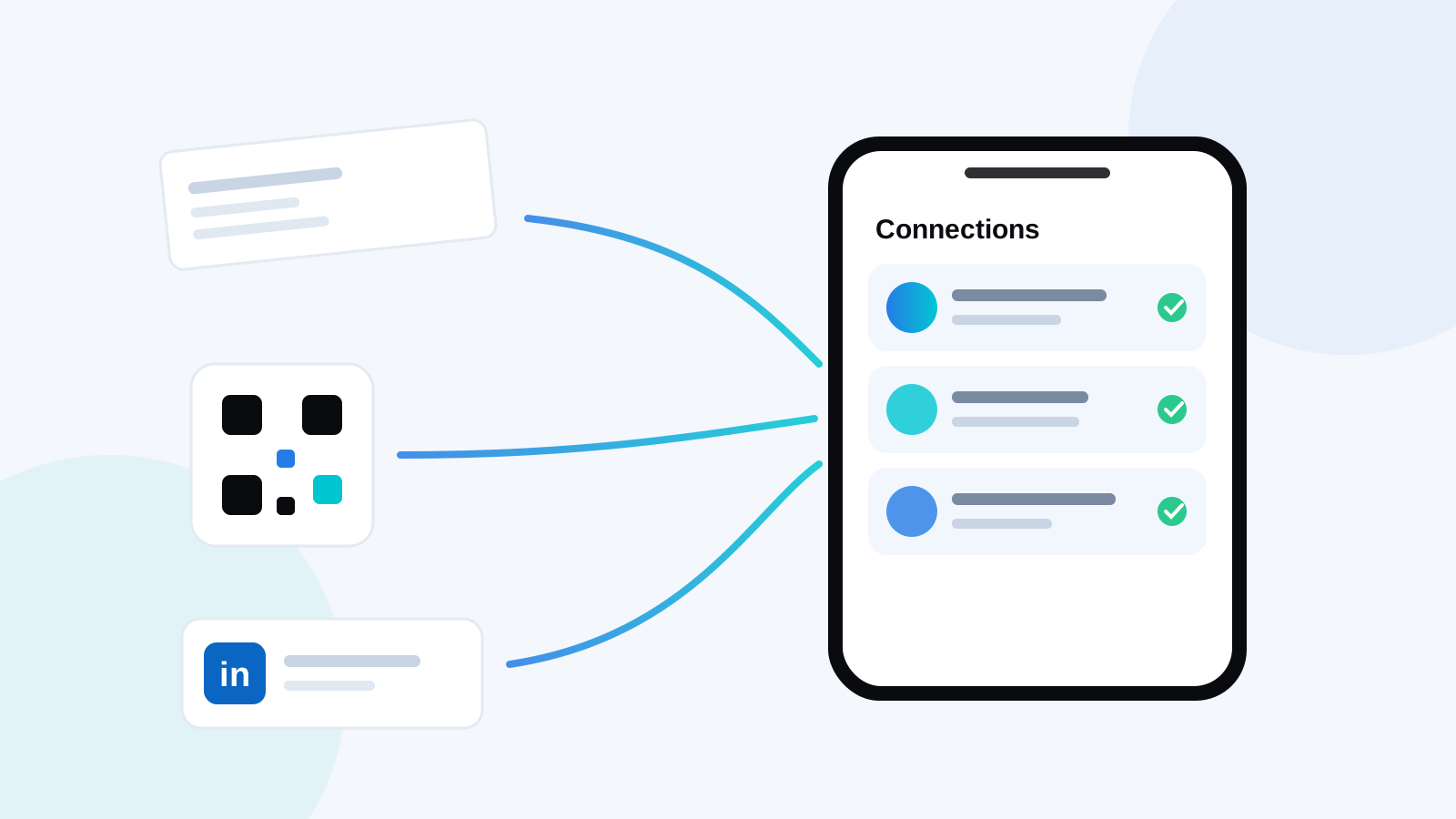
Most digital business card advice obsesses over one direction: how you share your details. But stand at any networking event in Colombo and watch what actually happens. The other person reaches for their pocket too. They have a paper card, or their own digital card with a QR code, or they say the sentence that now ends half of all introductions: "Just find me on LinkedIn."
Your side of the exchange is solved the moment you tap your card. The real question is what you do with theirs.
How do you capture a contact who has a paper business card?
Scan it, do not pocket it. A paper card that goes into your pocket has a lifespan of one laundry cycle. The TapID app reads a paper card with your camera, front and back, pulls out the name, number, email and company, and files the person into your leads inbox before the conversation ends. The card can then go back in their stack for the next victim.
The reading is done with on-device text recognition plus an AI cleanup pass, which matters more than it sounds. Business cards are typographic chaos: names in one corner, three phone numbers, a designation written in a decorative font. Software that just reads the letters gives you a jumble; the AI pass sorts the jumble into the right fields, so what lands in your inbox is a contact, not a puzzle.
What if they have a digital business card with a QR code?
Scan their QR the same way, straight from the TapID app. This is the scenario nobody talks about, and it is becoming the common one: two people meet and both have digital cards, possibly from different platforms.
Here is the quiet superpower. Most digital card platforms put a QR code on the card or the profile screen, and that code usually carries the contact's details in a standard format. Scan it with TapID and their name, number, email and company arrive perfectly, no typing, no transcription errors, because the data came from the code itself rather than from reading print. A contact QR is the cleanest capture there is.
It works across platforms, which is the point. Their card can be from any provider on earth; if it shows a QR, you can capture them.
What about people who only have LinkedIn?
Scan the QR inside their LinkedIn app. Few people know it exists: in the LinkedIn mobile app, the search bar has a small QR symbol, and tapping it shows a personal code. Scan that with TapID and their LinkedIn profile is attached to a new contact in your leads inbox. Add their name and a note about where you met, and the follow-up connection request writes itself.
The same applies to WhatsApp QR codes: scan one and the chat link is captured, ready for the follow-up message. One honest caveat, because we prefer honest answers: a WhatsApp code never reveals the person's phone number. That is a privacy choice by WhatsApp, and no app can get around it. What you capture is a working chat link, which for follow-up purposes is usually all you need.
Why does capturing beat collecting?
Because a captured contact carries context and a collected card does not. Everything you scan lands in your TapID leads inbox with the date, your notes, and their photo or card image attached. Three weeks later, "who was that vanilla exporter from the expo?" is a search, not an archaeology project. We wrote about why this matters for exhibitions specifically in Exhibition lead capture in Sri Lanka.
BNI founder Dr. Ivan Misner has spent decades making a point Sri Lankan networkers know instinctively: meeting someone is not the same as building a relationship with them, and the value sits entirely in what happens after the meeting. Capture is simply the bridge between the two. A contact you can find, with context you can act on, is a relationship you can actually start.
There is one more courtesy worth knowing. When you scan someone into your leads, TapID can email them your card in return, so the exchange goes both ways even though they did the sharing. You capture them; they receive you. Nobody leaves the conversation empty-handed.
The bottom line
A modern networker needs to receive as well as they give. Paper card, rival digital card, LinkedIn-only person: each of them can be in your leads inbox in under ten seconds if you stop collecting objects and start capturing contacts. Your card handles your half of the exchange. The TapID app now handles theirs.
Ready to network smarter?
Create your free TapID profile in minutes, or pick a card that makes your next introduction unforgettable.