Why your networking is not bringing referrals (and the VCP fix)
Attending every event and still getting no referrals? The VCP process explains why: visibility, credibility, profitability. Here is how to move up a stage this month.
You go to the breakfast meetings. You attend the mixers at Cinnamon Grand and the chamber events in Colombo 2. You hand out your details, you collect a pile in return, and you are genuinely friendly in every conversation.
And the referrals still do not come.
Most professionals conclude that networking does not work, or that it works for other people. The real problem is simpler and much more fixable: referrals arrive at the end of a process, and most of us keep restarting at the beginning.
Why does networking feel like it is not working?
Networking feels broken when you expect business from people who only know your name. Referrals come from trust, and trust is built in stages. If every event puts you in front of new strangers and none of them hear from you again, you stay permanently at stage one.
Think about the last person you referred a client to. You did not pick them because you met them once at an event. You picked them because you knew them, you trusted their work, and their name came to mind at the right moment.
That is the standard you are being held to as well.
What is the VCP process?
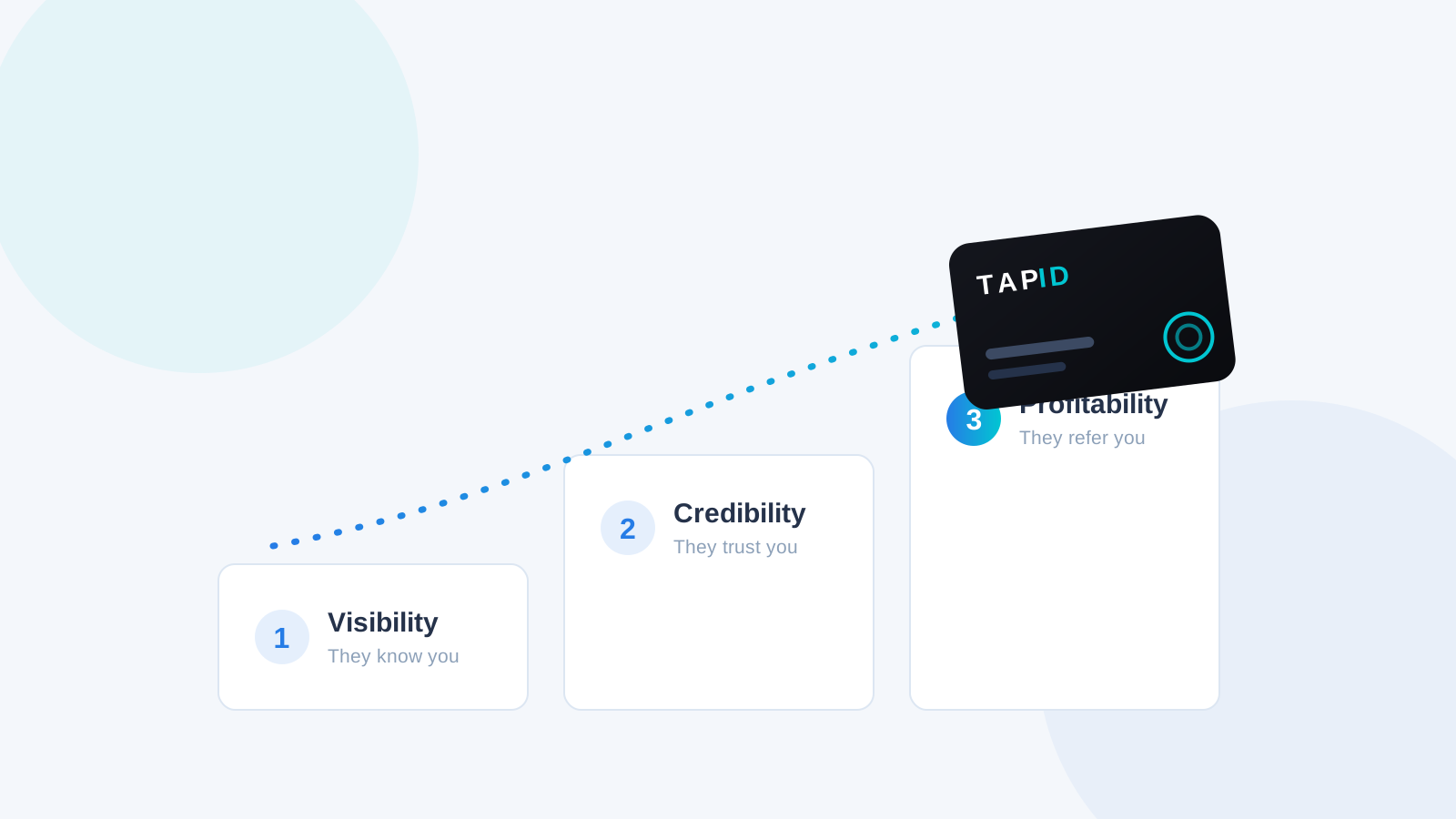
VCP stands for Visibility, Credibility, Profitability. It is a framework from Dr. Ivan Misner, the founder of BNI, describing the three stages every business relationship moves through before referrals flow. People must know you, then trust you, and only then will they confidently refer you.
Here is what each stage looks like in practice:
- Visibility. They know who you are and what you do. You have met, they can place your face, and your name rings a bell. This is where a good first meeting, and a card worth remembering, does its job.
- Credibility. They know you are good at what you do. You followed up when you said you would, you showed up on time, you helped someone in the group without asking for anything back.
- Profitability. They refer you without being asked. Your name comes up in rooms you are not in, attached to the words "you should talk to this person."
As Dr. Misner puts it, "networking is more about farming than it is about hunting." The stages are the seasons.
Where do most networkers get stuck?
Almost everyone gets stuck at visibility. They meet dozens of people, follow up with none of them, and then meet dozens more at the next event. High activity, zero progression. The fix is not more events. It is moving the people you have already met one stage forward.
There is a second, quieter failure mode: rushing. Pitching a sale to someone who only just learned your name is asking for profitability from a visibility-stage relationship. It reads as pushy precisely because it skips the middle stage, the trust.
If you have ever received a "great meeting you, here is my full price list" message the morning after an event, you have felt this from the other side.
How long does it take to reach profitability?
Longer than one meeting, shorter than you fear. Moving from visibility to credibility typically takes a handful of kept promises over a few months: a prompt follow-up, a useful introduction, a delivered piece of work. Profitability follows when your credibility has had time to be tested and repeated.
This is why members who stay in networking groups for years quietly outperform the ones who chapter-hop. In Sri Lanka's BNI chapters the pattern is easy to see: the people receiving steady referrals are rarely the loudest in the room. They are the ones who did what they said they would, consistently, for long enough that trusting them became easy.
How do you build credibility faster?
You cannot skip the credibility stage, but you can stop leaking it. Credibility is built through kept promises, so the fastest gains come from making your follow-through automatic: capture every contact properly, follow up within 48 hours, and keep the small commitments that most people forget.
A practical week-one system:
- Capture at the moment of meeting. When someone taps your card, their details land in your leads inbox with the time and event attached. No pockets full of paper, no "who was this again" pile on Monday.
- Follow up inside 48 hours. A short, personal message about their situation, not yours. We wrote a full playbook on this in the 48-hour rule.
- Make one small promise, then keep it. Send the article you mentioned. Make the introduction you offered. Each kept promise is a brick.
- Reappear on purpose. Credibility needs repeated contact. A note a few weeks later beats a reintroduction at the next event.
None of this requires talent. It requires a system that does not depend on your memory after a long evening.
What should you do this week?
Pick five people you already know but have never followed up with, and move each one a single stage forward. One message, one coffee, one introduction, one kept promise. That is the entire assignment, and it will do more than attending three new events.
If you are in a structured group like BNI, this maps directly onto your one-to-ones. We covered how digital cards fit that world in our BNI networking guide.
And if your capture step is still a shoebox of paper cards, that is the easiest leak to fix. A TapID card shares your profile in one tap and saves every person you meet, with context, before the conversation ends. See how it works on the devices page, check pricing when you are ready, or browse the FAQ if you are still weighing it up.
Referrals are not a networking trick. They are the harvest. Visibility is planting, credibility is tending, and profitability arrives on its own schedule, for the people still standing in the field when it comes.
Ready to network smarter?
Create your free TapID profile in minutes, or pick a card that makes your next introduction unforgettable.